Flowpacking cell: robots that fill the flowpacker
The flowpacking cell of TOS Robotics picks fresh produce from the belt and places it on the infeed of the flowpacker. You buy it as a complete cell for €150,000. It runs in production on a bell pepper line. Cells for avocados and mangos are ready for deployment.
- Price
- €150,000 per cell
- In production
- Bell peppers
- Ready for deployment
- Avocados and mangos
- How you buy it
- As a complete cell
€150,000 per cell. Paid back in under three years.
About 5,000 operating hours at a labour cost of €32.50 per hour.
In production on a bell pepper line
- 40
- picks per minute, per robot
- 99.1%
- pick accuracy
- 99.3%
- robot uptime
- 2.3M+
- robot cycles in production
Two versions
With industrial robot arms
In production on a bell pepper line. Two FANUC arms pick from the singulators and fill the infeed. The bell pepper case shows the line.
With the TOS Robot and quality control
Ready for deployment. TOS Robot arms hang on one beam and a camera checks every product before the pick. The cell is smaller and also takes over the quality check that people still do by eye.
The whole line in one view
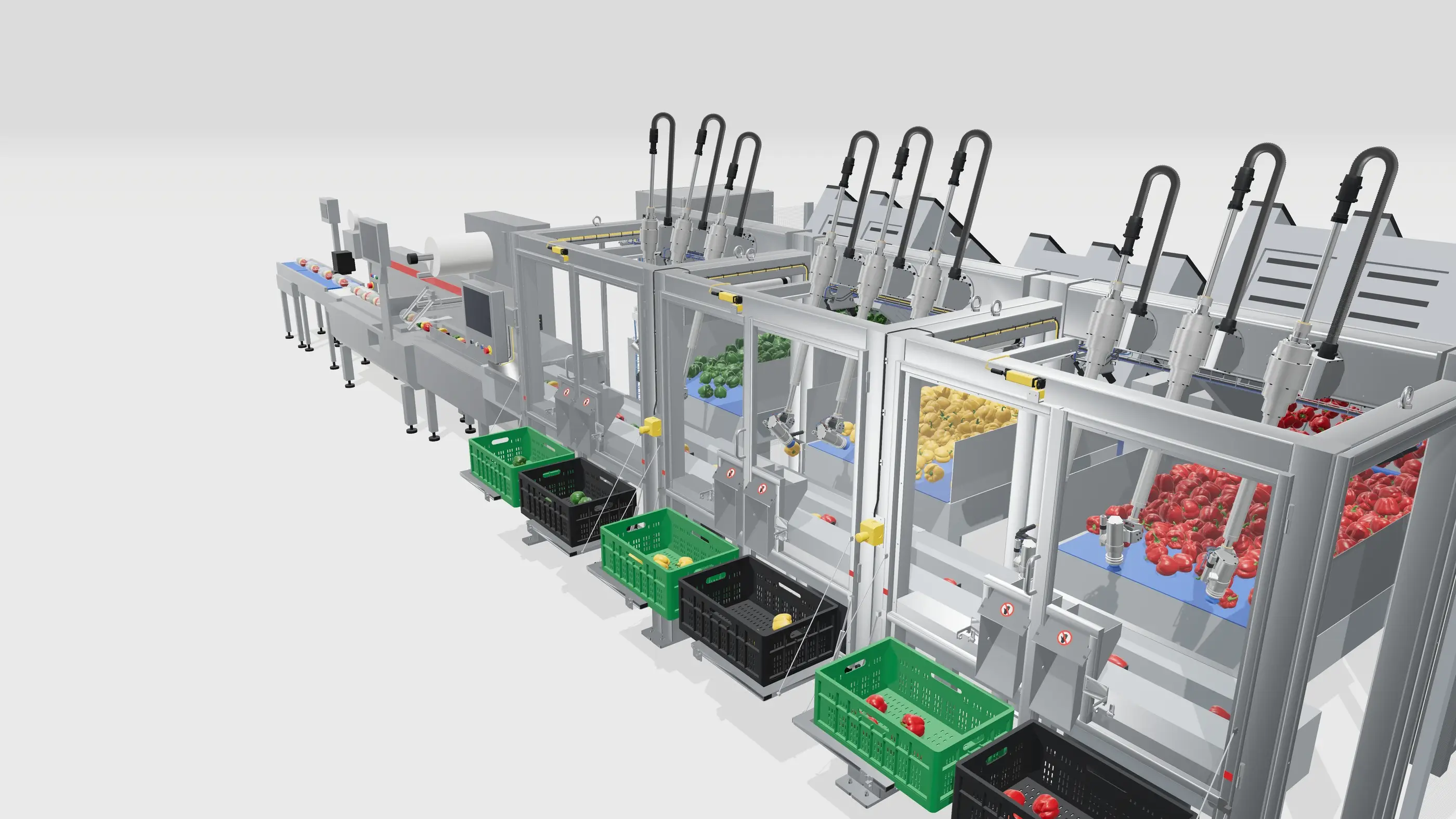
A render of the design. Crate tippers empty the crates onto a buffer belt. In three cells TOS Robot arms pick the peppers from the heap, one colour per cell. Each pocket gets one red, one yellow and one green pepper. The flowpacker at the end packs them.
Avocados and mangos in carton trays
How you buy it
You buy the flowpacking cell as a complete cell, for €150,000 per cell. TOS Robotics designs it around your products, formats and line speed, teaches it your product with the Teachbot and places it in front of your flowpacker. The cost guide shows how to work out the payback for your line.
Where it is used
Bell peppers
Robots fill the flowpacker, where people used to stand.
Mangos
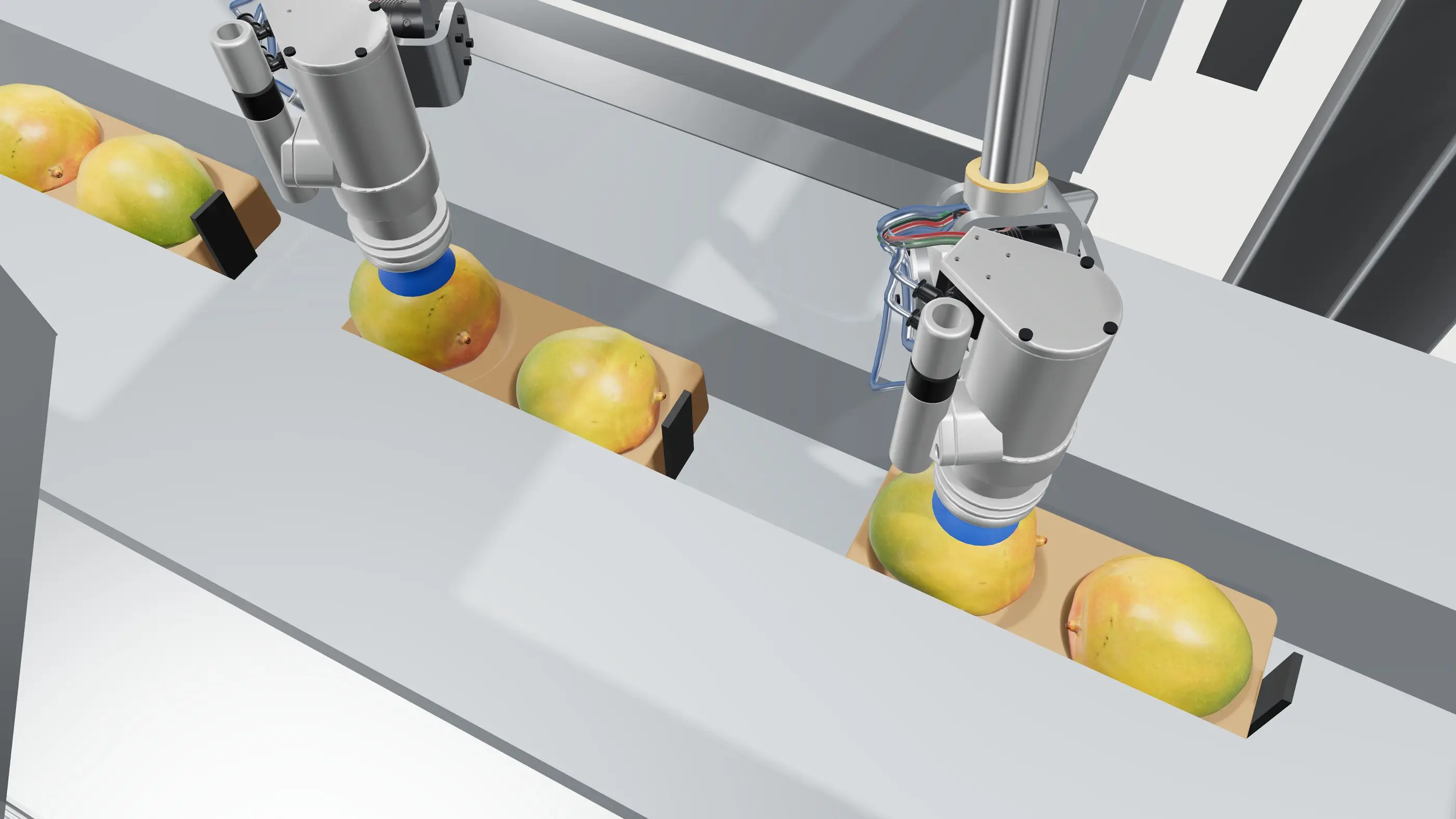
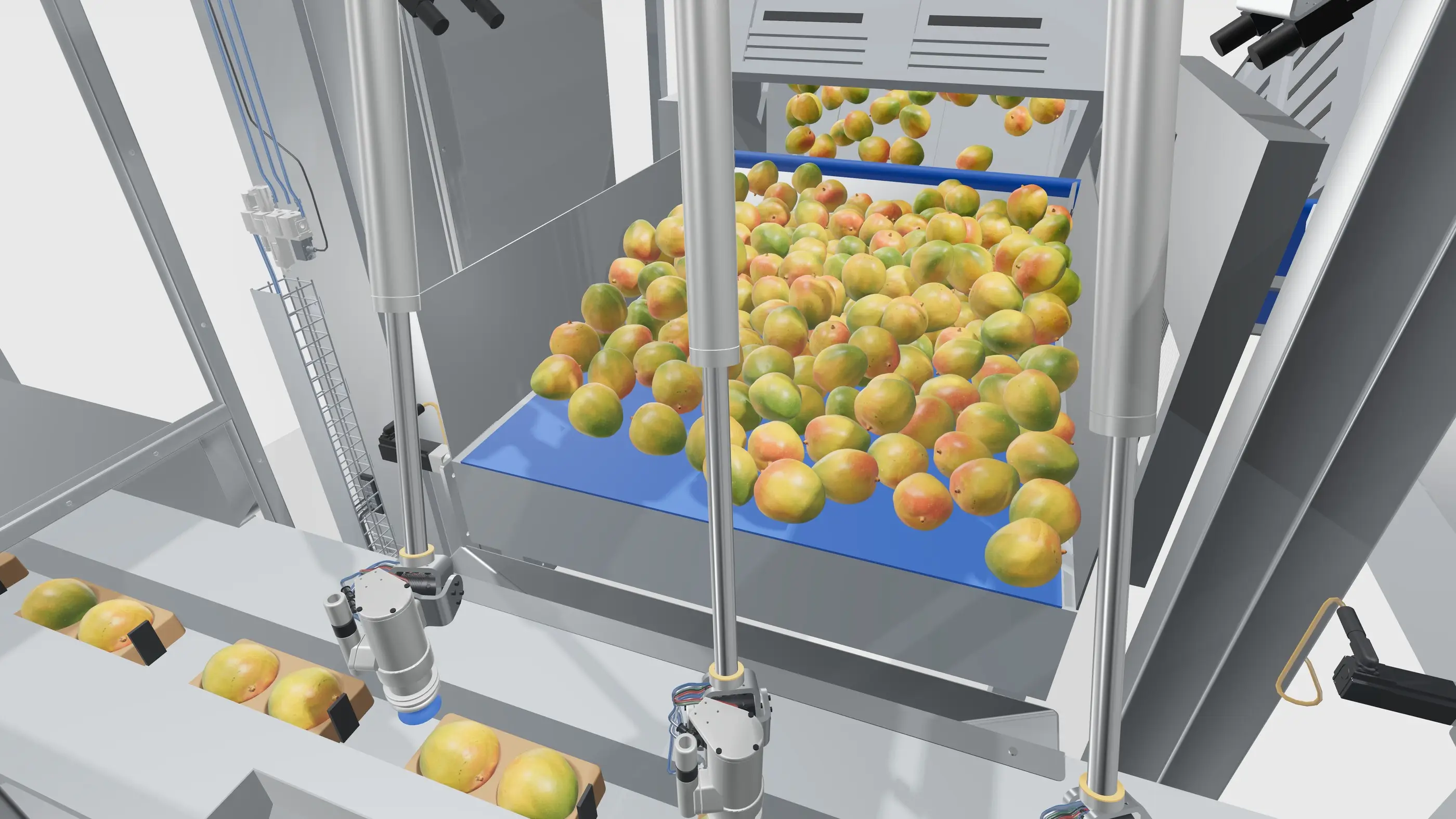
Ready for deployment. Mangos into carton trays of 2, or into small and normal crates.
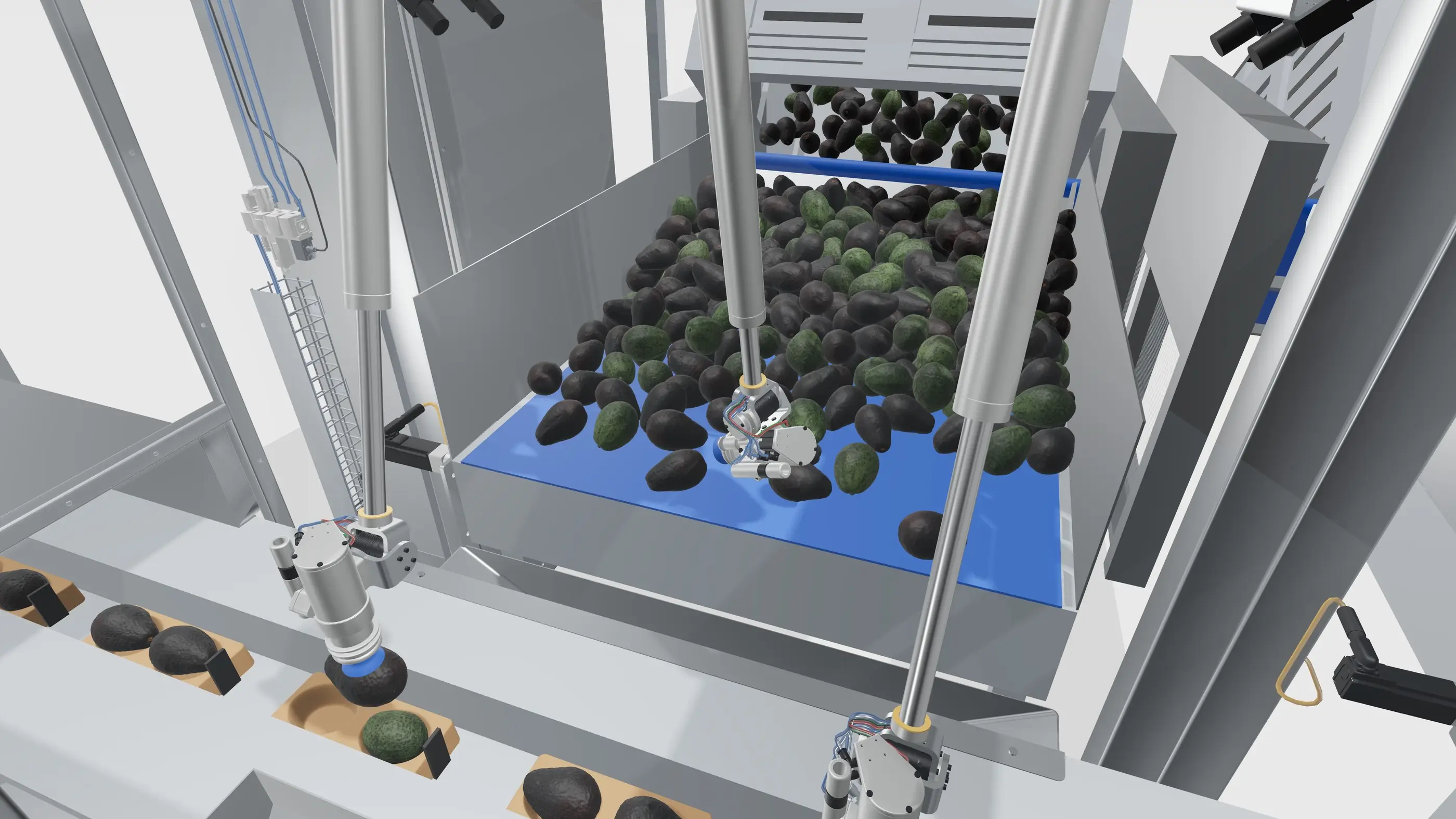
Avocados
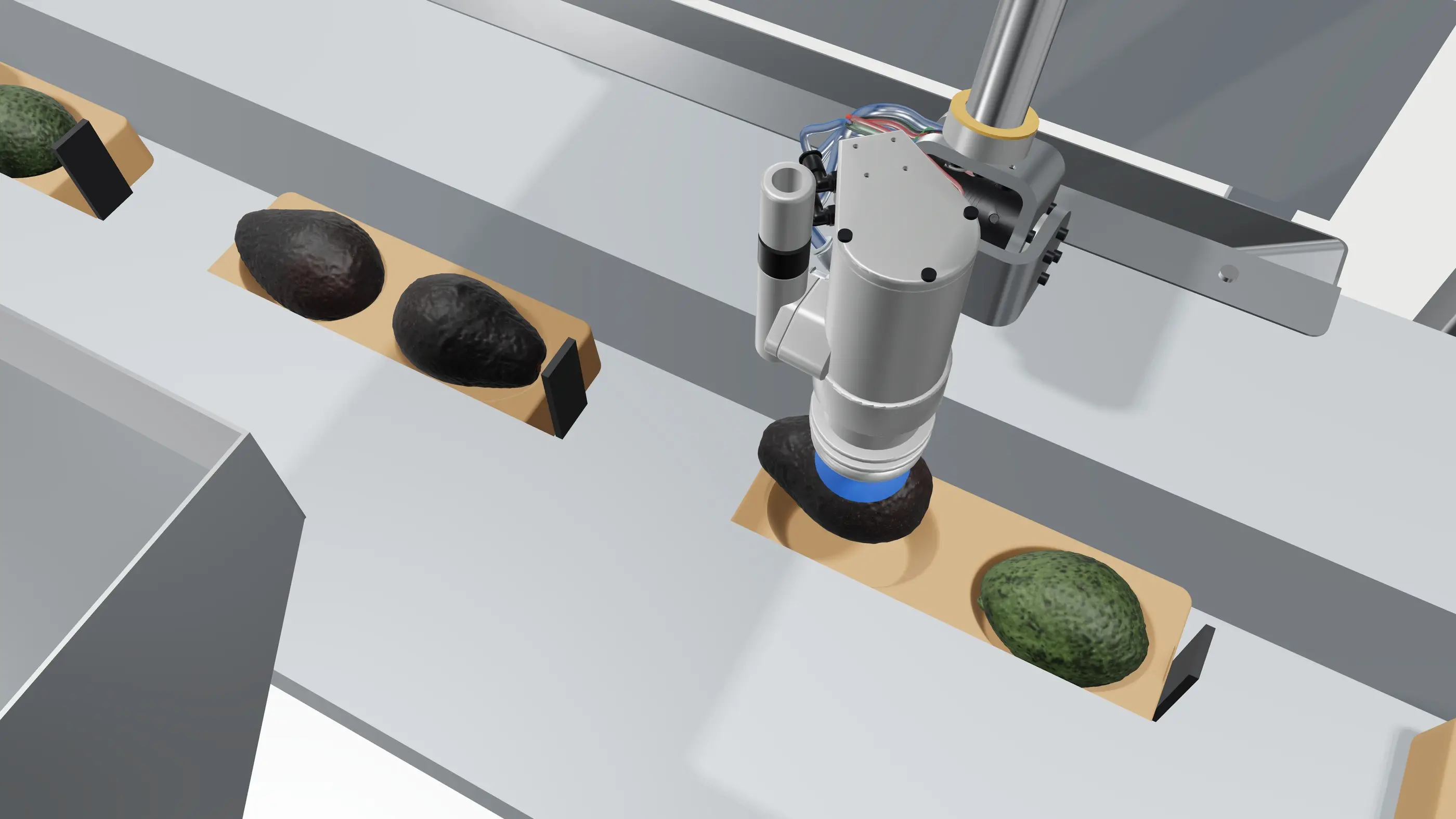
Ready for deployment. Avocados into carton trays of 2 or 4, or into crates.
Questions and answers
What is the difference between the two versions?
Three things. The version with the TOS Robot uses arms designed for this task. Quality control is built into the cell, so every product is checked before the pick. And the cell is more compact. The version with industrial arms runs in production today.
Which products does the cell pack?
Does the flowpacker have to be replaced?
No. The cell is placed in front of the existing flowpacker and fills its infeed. The packing machine stays as it is.
What happens with a pepper that fails the quality check?
The robot does not pack it. The pepper stays on the belt and leaves the cell at the end, into a crate.
How do you know the design will reach the speed?
The cell is built as a digital twin first. In the simulation the arms run with real product flows, including rejected peppers. The number of arms follows from that.
How does the TOS Robot hold a bell pepper?
With a suction cup that takes the pepper from above. The AI model chooses the spot on each pepper where the cup holds best.
Keep reading
- How to automate flowpacking of fresh produceThe flowpacker wraps on its own, the handwork is in feeding it, and TOS Robotics automates that in three steps.
- Robot or manual packing: how to compare the costsA TOS Robotics cell can be built for €150,000 and pays for itself after about 5,000 operating hours at €32.50 per hour.